|
|
|
|
|
|
|
|
|
|
|
|
|
|
|
|
|
|
Used machines for sale
Main brands:
Marel, Stork
|
| Industrial chicken leg thigh and drumstick deboners for processing plants |
ADVANCED POULTRY DEBONING ENGINEERING Focus: Carcass Yield Optimization and Industrial Throughput
OPERATIONAL OBJECTIVES AND KPI'S The implementation of automated leg quarter deboning systems aims at rigorous "Yield" control. The focus is on the anatomical extraction of the femur and tibia, minimizing "Meat Recovery" (residual meat on bones) and eliminating the variability of manual cutting. Key gains include the standardization of fillets for the export market and the reduction of operational "Headcount" in temperature-controlled environments.
TECHNOLOGICAL ARCHITECTURE AND EXTRACTION METHODS
A) Diaphragm and Piston Technology (e.g., Marel MX Line): Based on the "compression extraction" principle. The part is positioned, and a piston pushes the bone through a high-density polymer diaphragm. The diaphragm retains the muscle mass while the bone is ejected.
Application: Ideal for high cadence and focus on deboned thigh fillets.
B) Inline Mechanical Deboning: Sequential modules that perform a perimeter incision at the joint, followed by mechanical scraping (scrapers).
Application: Integrated into "cut-up" systems where the part is not detached from the overhead conveyor shackles.
C) Intelligent Deboning (X-Ray Vision): Next-generation systems that use X-ray sensors to measure the density and bone length of each individual part before cutting.
Application: Maximum precision for plants serving high-demand markets (USA/Japan).
KEY PLAYERS AND ENGINEERING ANALYSIS
MAREL STORK (Netherlands): Global benchmark in "High-Speed Deboning". The MX model stands out for its robust mechanical assembly and low maintenance relative to processed volume (6,000 p/h). Its engineering focuses on the integrity of the Knee Joint.
MEYN (Netherlands): Integration specialist. Its TDS (Thigh Deboning System) is recognized for its Sanitary Design and quick adjustments for different flocks.
FOODMATE (USA/Netherlands): Innovative in rotary systems that allow deboning of left and right legs simultaneously with independent adjustments.
COMPARATIVE MATRIX: FULL AUTOMATION VS. SEMI-AUTOMATIC
AUTOMATED SYSTEMS (High Performance)
Advantages: Technical consistency; reduction of repetitive strain injuries (ergonomics); longer shelf life due to reduced manual contact.
Disadvantages: High Capex; requires standardization of the input flock (weight range).
SEMI-AUTOMATIC SYSTEMS
Advantages: Versatility to process birds outside the weight range; lower implementation cost.
Disadvantages: Higher downtime for manual adjustments; fluctuating yield according to work shifts.
FINAL PRODUCT SPECIFICATIONS
Deboned Thigh: Skin-on or skinless, focused on retail and Food Service.
Meat for Processing: Intended for emulsified or restructured products.
By-products: Bones with low residual meat for Rendering plants. |
|
|
|
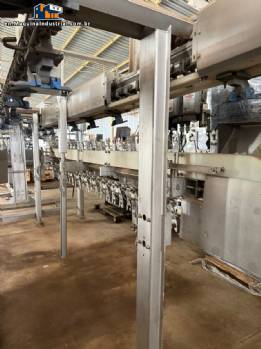 |
Brand: Marel, Stork
Semi-automatic leg deboner for chicken.
Manufacturer: Marel Stork Poultry Processing B.V.
Production capacity: 6,000 legs per hour.
Module: thighbone removing module.
Model: MX.
Year of Manufacture: 2012.... |
|
|
| |
| |
|
|
|
|
|
Camargo Industrial conducts the study and cross-referencing of data for each piece of equipment approved for advertisement, maintaining a high-level business ecosystem. For intermediary machines, the information is provided by third parties and must be validated under the responsibility of the buyer, with Camargo's support in indicating specialized consultants and technicians. This support aims at the safety and reliability in evaluating the condition of the equipment, the need to comply with the regulatory standards of the Ministry of Labor, and fundamental information for a secure transaction.
Camargo Industrial's own inventory is available for viewing at our headquarters, where we offer technical inspection accompanied by the rigor of our professionals. Scheduling is required for visits.
|
|
|