Bagging Machines: Types, Dosing Systems, and Industrial Applications
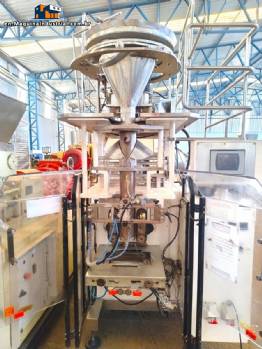
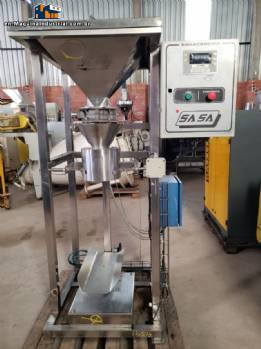
Bagging machines are equipment used to weigh and package products into bags, whether in small or large quantities. They are designed to facilitate the handling of various types of materials, whether solid, liquid, or granular, and are widely used in different sectors of industry, such as food, chemical, pharmaceutical, agricultural, construction, among others.
1. Types of Bagging Machines and Dosing Systems
There are several types of bagging machines, and the dosing system is one of the main factors that defines which model will be used. Let's detail the most common dosing systems:
Bagging machines with load cells:
Load cells are electronic sensors that measure the force generated by the mass of the product being bagged. They are widely used in weighing systems where precision is crucial. Load cells allow for highly precise control and are frequently found in automatic or semi-automatic bagging machines. The product weight is constantly monitored and adjusted until the desired value is reached.
Pneumatic drawer bagging system:
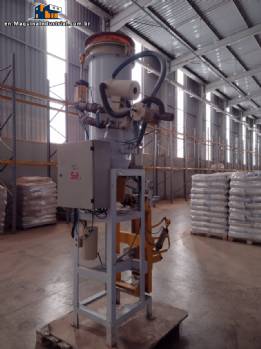
This system uses a pneumatic drawer that is filled with the product until the correct weight is reached. The drawer is connected to a pneumatic control system, which performs the product dosing very precisely. This type of bagging machine is commonly used for granulated or bulk products, such as animal feed, cement, fertilizers, and chemicals. The main benefit of this system is its high capacity for handling large volumes of product.
Volumetric screw bagging system:
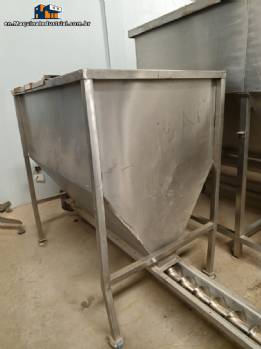
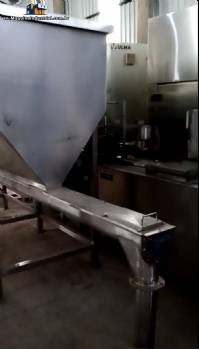
This system uses a helical screw to move the product into the bag. The dosing is based on the volume of material passing through the screw, and the precision depends on the shape and density of the product. It is common for more fluid or granulated products, such as salt, flour, and sugar. The coaster system is one of the simplest and most robust, widely used when weight precision doesn't need to be extremely high, but speed of operation is crucial.
Vibration-dosing bagging machines:
This system uses vibration to move the product and fill the bag. The vibration is regulated to allow the amount of product entering the bag to be adjusted as needed. This technology is common for finely granulated or powdered products, such as flour, cement, coal, and other pharmaceutical products.
2. Types of Bags: Varied Sizes and Closure Types
Bags for bagging can be of various types, and the type of bag chosen depends on the product to be bagged and the characteristics of the production process. The main types of bags are:
Open Bags: These are bags without a valve, open at the top, where the product is placed directly and then closed. This type of bag is common for products such as fertilizers, animal feed, and granules.
Valve Bags: These have a valve at the top that closes automatically when the bag is filled. This type is ideal for products such as cement, lime, sodium, and other fine materials that require sealing to prevent leaks.
Big Bags: Also called flexible bags, they are used to bag large volumes of material, capable of holding from 500 to 2,000 kg, or more. They are common for products such as fertilizers, cement, grains, and other bulk products. The bagging line for big bags is often fully automated to ensure the speed and efficiency of the process.
3. Semi-Automatic and Automatic Bagging Machines
Semi-Automatic Bagging Machines:
Semi-automatic bagging machines require human interaction during the bagging process. Typically, the operator places the bag at the loading point and the system performs the product dosing. The operator may need to adjust the bag, close and seal the product manually or with the aid of a sewing or sealing machine. These machines are suitable for smaller production volumes or when manual control is necessary. They are more common in small to medium-sized industries where full automation is not yet feasible or necessary.
Automatic Bagging Machines:
Automatic bagging machines operate with minimal human intervention and can be fully integrated into production systems. They perform the entire process of weighing, dosing, closing, and even palletizing the product. In some cases, the machine can even check the integrity of the bag and reject bags with problems. Automatic bagging machines are used in large industries with high production volumes, such as the food, petrochemical, and manufacturing industries. They also offer greater precision and efficiency, reducing product waste and improving quality control.
4. Materials Used: Carbon Steel vs. Stainless Steel
Carbon Steel: It is a material
Carbon steel: Robust and economical, it is used in equipment for non-corrosive products or when long-term durability is not a high requirement. Carbon steel bagging machines are more common in industrial environments where maintenance is not so intensive and corrosion resistance is not critical.
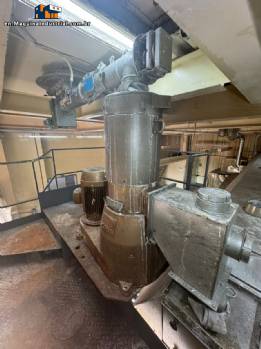
Stainless steel: Stainless steel is used when the process requires corrosion resistance, such as in the food or pharmaceutical industries, where the processed products may be aggressive or contact with the final product must be kept more hygienic. Stainless steel bagging machines are more expensive, but guarantee greater durability and ease of cleaning.
5. Main Bagging Machine Manufacturers
Here are some of the main bagging machine manufacturers in Brazil and worldwide:
Brazil:
Cozza Máquinas: Brazilian manufacturer specializing in bagging, dosing and automation systems.
Mills: One of the main suppliers of packaging and bagging solutions in Brazil, with a range of systems for different types of products.
Valtra: Specializes in industrial automation and bagging solutions for diverse products.
International:
Premier Tech: A global company specializing in industrial automation solutions, including bagging machines and packaging systems.
CFT Group: An international manufacturer offering a wide range of automatic and semi-automatic bagging machines.
FLSmidth: A global supplier of bagging systems for the cement and mining industries.
Haver & Boecker: A German company specializing in packaging equipment, including bagging machines for large volumes such as big bags.
The choice of bagging machine type and dosing system depends on several factors, such as the type of product, the need for precision, the production volume, and the specific requirements of the industry. With technological advancements, it is possible to find highly automated and efficient solutions suitable for large industries, as well as more affordable semi-automatic options for smaller companies.
These machines are essential to ensure that products are packaged efficiently, accurately, and safely, as well as contributing to increased productivity and reduced costs on production lines. |