Fundamentals of Industrial Rotary Filling
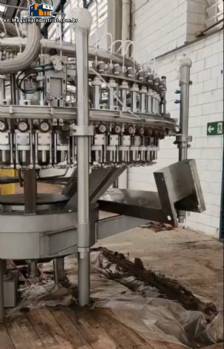
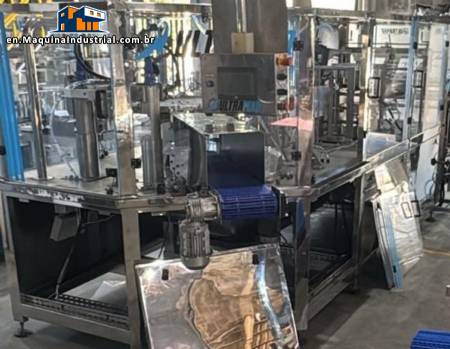
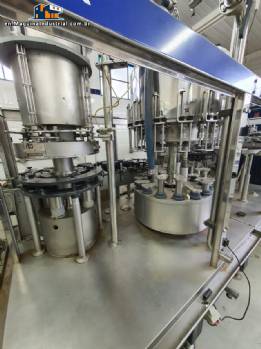
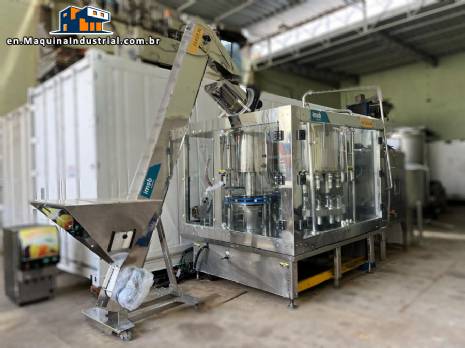
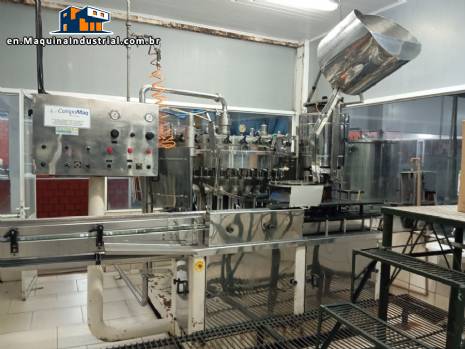
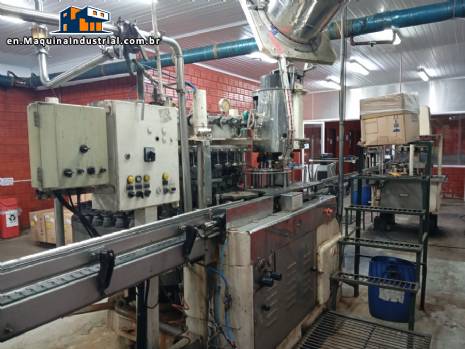
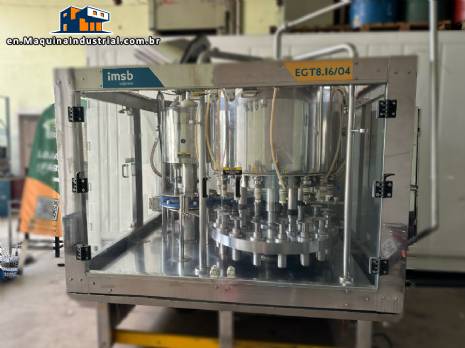
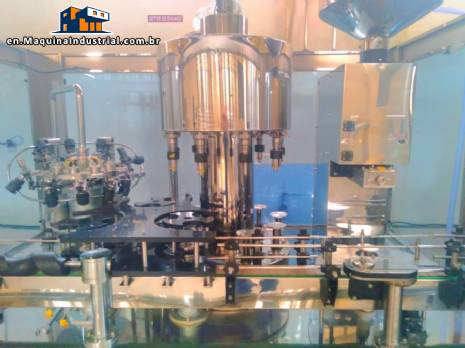
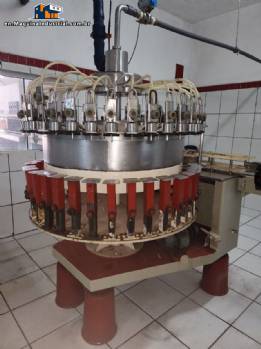
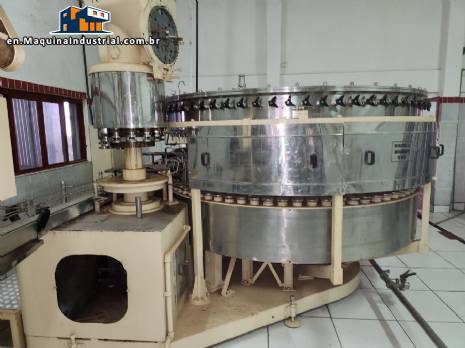
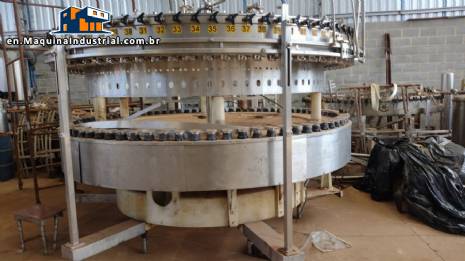
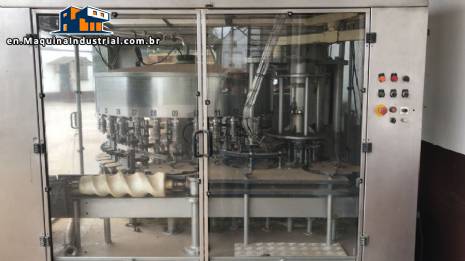
Industrial rotary filling is the main method for dispensing and capping liquids, viscous fluids, and pastes in high-speed lines. Unlike linear systems, which operate in intermittent stop-and-go cycles, rotary systems operate in continuous flow. Packages are introduced via feed screws and transfer stars onto a constantly rotating carousel, where rinsing, dispensing, and capping steps occur simultaneously during the angular movement of the equipment.
The main objectives of rotary filling engineering are:
Volumetric repeatability: ensuring high precision in dispensing, reducing waste due to overfilling (giveaway) and meeting metrological control requirements.
Microbiological and physicochemical integrity: minimizing product contact with the external environment, controlling oxygen absorption (oxygen pick-up), and preserving characteristics such as carbonation, viscosity, and sterility.
Overall Equipment Effectiveness (OEE): Maximize line productivity, typically expressed in bottles per hour (BPH).
Fluid Rheology and Packaged Product Matrix
The selection of packaging technology depends directly on the rheological properties of the product.
Low-viscosity liquids, such as mineral water, clarified juices, vinegars, alcohol, sanitizers, and mouthwashes, flow freely by gravity or under low pressure. These products require turbulence control to avoid excessive foam formation.
Carbonated liquids, such as beers, soft drinks, sparkling water, energy drinks, hard seltzers, and sparkling wines, contain dissolved carbon dioxide under pressure. Their packaging requires pre-pressurization of the container to prevent gas loss and foam formation.
Viscous and semi-pasty fluids, such as vegetable oils and lubricants, ketchup, mayonnaise, liquid soap, fabric softeners, shampoos, and syrups, exhibit high resistance to flow. Therefore, they typically use positive displacement systems, such as piston dispensers or pressure-assisted filling.
Highly viscous and pasty products, such as honey, greases, high-viscosity creams, extracts, gels, and toothpastes, require positive-closing anti-drip valves and robust pneumatic or servo-motorized drive systems.
Sensitive or sterile products, including eye drops, vials, pharmaceutical syrups, nutraceutical supplements, and UHT dairy products, require aseptic environments, components manufactured from AISI 316L stainless steel, and complete process traceability.
Packaging, Bottles, and Closure System Specifications
1. Container Materials
PET (Polyethylene Terephthalate) is widely used in bottles for beverages, oils, and cleaning products, standing out for its lightness, impact resistance, and good transparency.
Glass, both returnable and disposable (one-way), is a chemically inert and rigid material, being the standard for premium beers, wines, spirits, preserves, and perfumes.
HDPE (High-Density Polyethylene) and PP (Polypropylene) are used in the manufacture of rigid or semi-rigid bottles intended for cosmetics, chemicals, lubricants, and dairy products.
Aluminum is used in the manufacture of bottles and cans for beverages, offering high mechanical resistance, low weight, and excellent recyclability.
2. Capacity Ranges
Packaging is typically classified as:
Micro-bottles and dropper bottles: from 5 mL to 100 mL.
Conventional bottles: from 100 mL to 2,000 mL (2 L).
Gallons and jugs: between 3 L and 5 L, mainly used for cleaning products, oils, and water.
3. Closure Systems
Among the main types of caps are continuous screw-on plastic caps, in PCO 1881, 28 mm and 38 mm standards, as well as Sport Cap, Flip-Top, Push-Pull models and tamper-evident caps.
Metal caps include ROPP (Roll-On Pilfer-Proof) models for wines and spirits, the traditional 26 mm and 29 mm Crown Cork caps for glass bottles, and Twist-Off caps used in jars and preserves.
Internal components such as stoppers, droppers, spray valves and dosing pumps can also be incorporated.
As complementary sealing systems, aluminum discs sealed by electromagnetic induction and heat-shrinkable seals (shrink sleeves) are used.
Dosing Technologies
1. Gravity or Sustained Pressure Filling
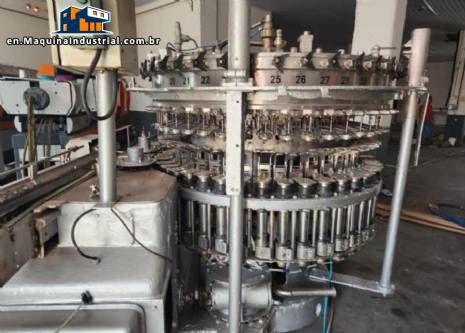
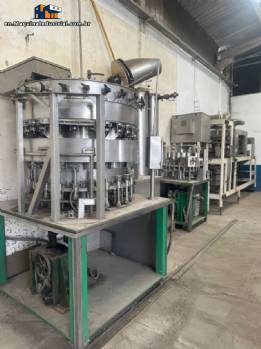
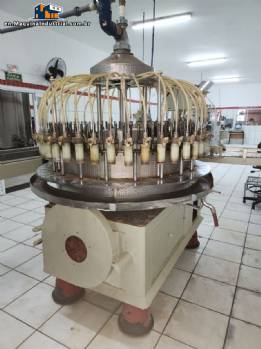
In this system, an upper reservoir feeds the valves by gravity or low pressure. The valve opens when the bottle neck comes into contact with the filling mechanism, allowing the liquid to fill the container until it reaches the vent tube, which controls the final level.
It is widely used for still water, clarified juices, vinegars, and other non-carbonated beverages.
Carbonated beverages.
2. Isobaric Filling (Counter-Pressure)
In isobaric filling, the bottle is initially sealed against the filling valve. Then, CO₂ or N₂ is injected until the internal pressure of the packaging equals the pressure of the product tank. Only after this equalization is the filling valve opened, allowing the liquid to flow without turbulence. At the end of the process, a slow decompression (snifting) is performed to prevent excessive foam formation.
This technology is indispensable for beers, soft drinks, carbonated waters, and sparkling wines.
3. Volumetric Piston Dosing
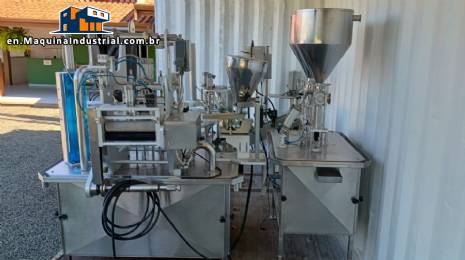
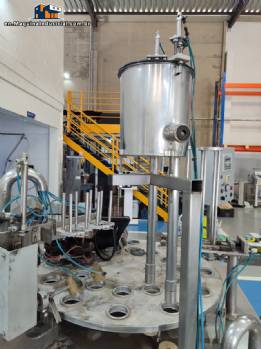
The system uses a precision cylinder that aspirates a pre-defined volume of product and then transfers it to the container by means of a servomotor or pneumatic actuator. The anti-drip valve ensures clean and precise filling.
It is suitable for creams, sauces, oils, syrups, and high-viscosity products.
4. Flow Metering
Each valve has an individual flow meter. In mass flow (Coriolis) systems, the mass of the fluid is measured directly; in electromagnetic systems, the volume is determined based on electrical conductivity. The controller automatically stops filling when the programmed value is reached.
Among its main advantages is filling without mechanical contact between the valve and the neck (contactless), facilitating automatic CIP cleaning and SIP sterilization operations.
5. Weight Metering
In this method, each package remains supported on a load cell during filling. The weight is continuously monitored, allowing the flow to be stopped exactly when the programmed mass is reached.
It is especially suitable for aggressive chemicals, agricultural pesticides, and high-value-added lubricants, as it eliminates errors resulting from density variations caused by temperature.
6. Vacuum Filling
A pump generates a partial vacuum inside the glass bottle, creating a pressure difference that draws the liquid up to a level previously defined by the filling tube.
This system is mainly used in the perfume, liquor, and premium beverage industries, where visual uniformity of the filling level is a quality requirement.
7. Peristaltic Pump Dosing
Dosing occurs by compressing a flexible tube with rotating rollers. Since the product remains exclusively inside the tube, contact with the machine's mechanical components is eliminated.
This technology is widely used in the pharmaceutical industry for filling eye drops, vials, and other sterile products, meeting GMP and FDA standards.
Block Architectures and Integrated Modules
Integrating processes into a single structure reduces the factory footprint, decreases contamination risks, and eliminates mechanical bottlenecks resulting from the transfer of packaging between independent equipment. Depending on the degree of integration, filling machines can be classified into different architectures.
1. Classification by level of integration
The Uniblock (Standalone Filler) consists exclusively of the filling carousel. In this configuration, the bottle cleaning and capping steps are performed by independent equipment, positioned at different points in the production line.
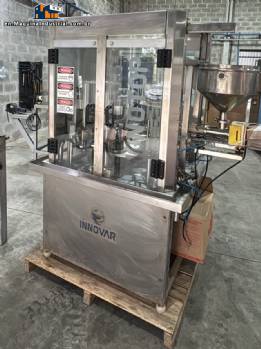
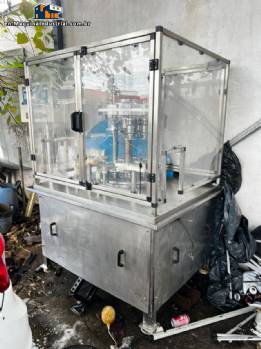
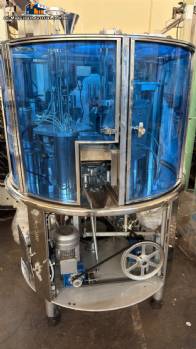
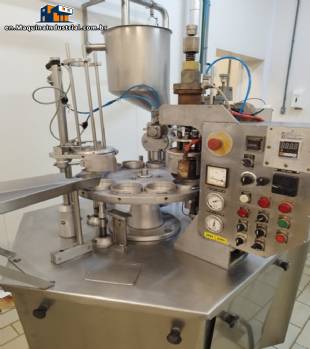
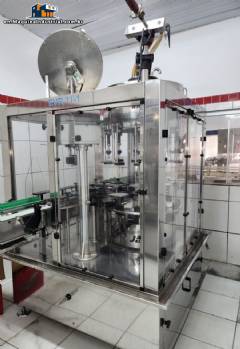
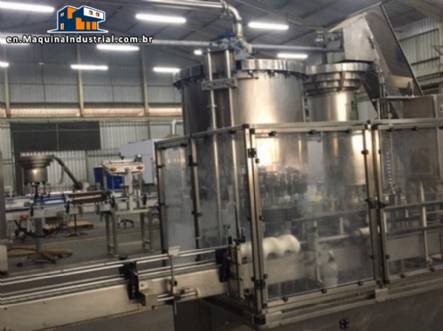
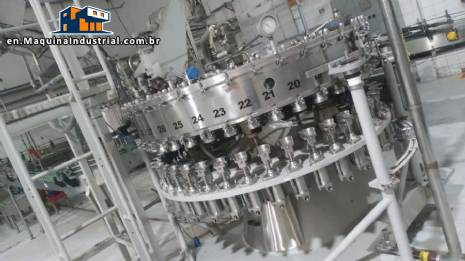
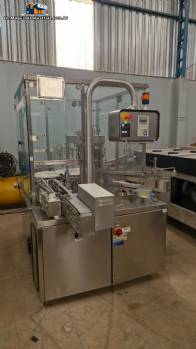
The Monoblock (2-in-1 – Filler-Capper) integrates, in a single piece of equipment, the filling carousel and the capping tower, synchronized by a transfer star. This configuration is widely used in the cosmetics, chemical, and food industries that do not require rinsing immediately before filling.
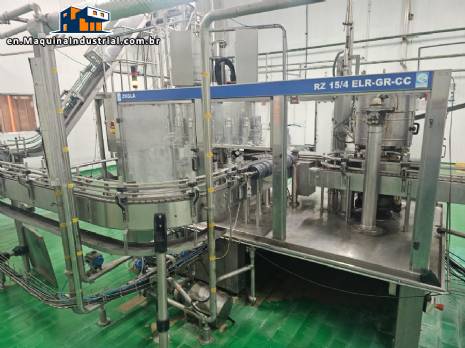
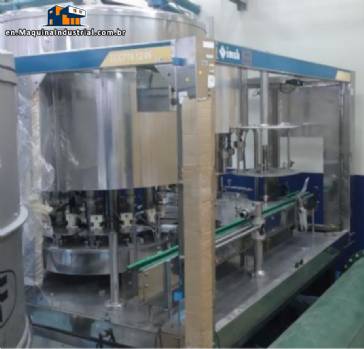
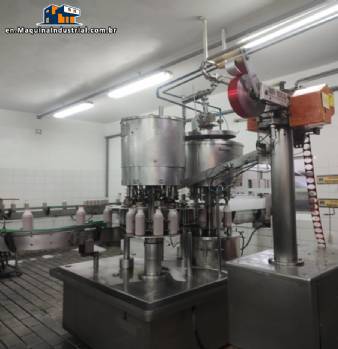
The Triblock (3-in-1 – Rinser-Filler-Capper – RFC) represents the most widely used architecture in the beverage industry. The rinsing or cleaning of the bottles, product dosing, and capping steps are integrated into a single structure, ensuring high productivity and reduced handling of the packaging.
The Quadriblock (4-in-1) incorporates an additional decontamination step before rinsing, using agents such as peracetic acid, ozone, or steam for thermal sterilization. This configuration is essential for sensitive beverages, NCF (Not From Concentrate) juices, and dairy products processed in ultra-clean or aseptic systems.
Combi Systems (Blow-Fill-Cap – BFC) directly integrate the PET preform blow molding machine into the filling and capping system. Since the bottle is formed, sterilized by the blowing process itself, and immediately sent to filling, the need for a rinsing module and intermediate air conveyors is eliminated, significantly reducing energy consumption and the space occupied by the line.
2. Integrated Operational Modules
Rinser Module
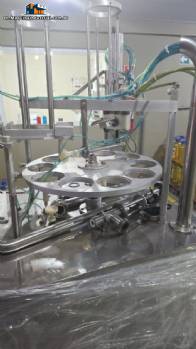
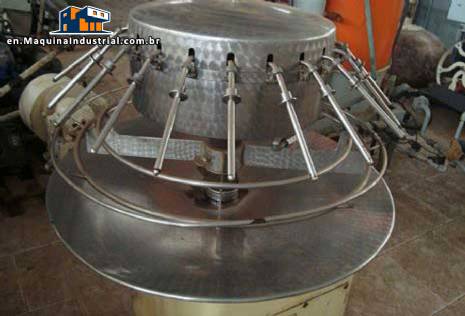
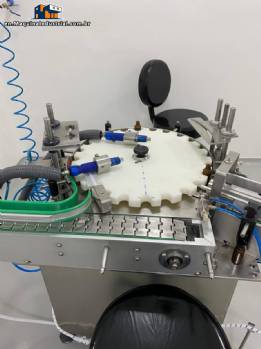
The rinse module uses rotating grippers that hold the packaging by the neck (neck handling) and invert it approximately 180°, positioning it over the washing nozzles.Depending on the application, different sanitizing media can be used, including filtered water, sterile water, ionized air for particle removal and neutralization of electrostatic charges, ozone, or sanitizing solutions such as peracetic acid.
Closure Modules
Closure systems can assume different configurations depending on the type of cap used.
Towers with magnetic hysteresis clutches are designed for the application of continuous screw plastic caps, such as the PCO 1881, 28 mm, and 38 mm standards. Torque control is precise, reducing the risk of damage to the packaging threads.
ROPP (Roll-On Pilfer-Proof) crimpers use forming rollers to mold aluminum caps directly onto the necks of glass bottles, and are widely used in the wine and spirits industries.
Crown cork type capping machines apply crown-type metal caps, typically in diameters of 26 mm and 29 mm, used on beer and soft drink bottles.
Specific towers can also be incorporated for the automatic insertion of stoppers, droppers, spray valves, and dosing pumps, using vibratory feeding and positioning systems.
As a complement to the closing process, modules for electromagnetic induction sealing of aluminum discs and automatic shrink sleeve applicators can be installed.
Chapter 6 – Production Scales and Nominal Capacity Ranges
The production capacity of a rotary filling machine is mainly determined by the number of filling valves and closing heads installed on the carousel, as well as by the characteristics of the product, packaging, and technology employed.
Low and medium speed lines have a nominal capacity between 1,500 and 6,000 bottles per hour (BPH). These lines are typically used by pharmaceutical industries, cosmetics manufacturers, specialty chemicals companies, and craft breweries. In this range, monoblock systems equipped with approximately 6 to 16 filling valves predominate.
High-speed lines operate between 6,000 and 24,000 BPH, serving medium and large-sized industrial plants for filling sauces, edible oils, lubricants, cleaning products, juices, and other liquid foods. They generally employ triblock systems with about 18 to 48 filling valves.
Ultra-high-speed lines exceed 24,000 BPH, and can reach or exceed 72,000 bottles per hour, depending on the equipment configuration. These lines are characteristic of large manufacturers of mineral water, soft drinks, beers, and other high-volume beverages, using quadblock systems and Combi systems equipped with approximately 60 to more than 120 filling valves.
Global and National Mapping of Manufacturers and Models
The global market for rotary filling machines is comprised of manufacturers specializing in different industrial segments, from large-scale beverages to high-precision pharmaceutical and chemical applications. Supplier selection depends on production capacity, level of automation, filling technology, and industry regulatory requirements.
Manufacturers for large-scale beverage and food production
Krones, from Germany, is one of the world's largest manufacturers of bottling and packaging equipment. Among its main product lines are the Modulfill filling machines, in the VFS, HES, and NW series, as well as the integrated Contiform 3 Speed Combi system. Its equipment operates at capacities of approximately 10,000 to 90,000 bottles per hour (BPH), and is widely used in the beer, soft drink, mineral water, juice, and dairy segments.
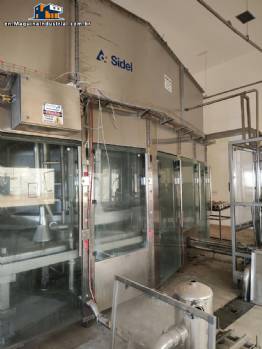
Sidel, part of the Tetra Laval Group, develops equipment such as SuperCombi, Matrix SF100/FM, and EvoFILL, with capacities ranging from 15,000 to 80,000 BPH. Their solutions primarily serve the production of mineral water, carbonated soft drinks (CSD), edible oils, and sensitive juices.
GEA Group offers equipment such as ECOFILL, VIPoll Visitron, and Aseptic Blow Fill Cap systems, mainly intended for the aseptic dairy, industrial and craft beer, and NCF (Not From Concentrate) juice industries. Capacities range approximately from 6,000 to 60,000 BPH.
SACMI, a traditional Italian manufacturer, produces the AWS, BloFill, and Opera lines, with capacities between 12,000 and 72,000 BPH, mainly focused on bottling mineral water, soft drinks, and other non-alcoholic beverages.
CFT Group, currently part of the Coesia Group, supplies equipment such as the Master RS and Master C-PET, with capacities ranging from 3,000 to 40,000 BPH. Their systems are widely used in the packaging of tomato paste, sauces, beers, and juices with pulp.
Manufacturers for the pharmaceutical, cosmetic, and chemical sectors
Syntegon, formerly Bosch Packaging Technology, develops equipment from the FLT, FVR, and MDR series, intended for packaging Injectables, vials, syrups, and eye drops, meeting GMP and FDA standards. Their production lines have approximate capacities between 2,000 and 36,000 BPH.
The Marchesini Group produces equipment such as the ML661, Nastro, and Steril, mainly used in the manufacture of premium cosmetics, perfumes, and liquid medications, with capacities between 1,500 and 24,000 BPH.
The IMA Group offers solutions such as Sterifill and the FLX Series, focused on the filling of nutraceuticals, oral suspensions, and hospital sanitizers, operating at capacities of approximately 3,000 to 30,000 BPH.
National Manufacturers
In the Brazilian market, manufacturers specializing in solutions adapted to the needs of the national industry stand out.
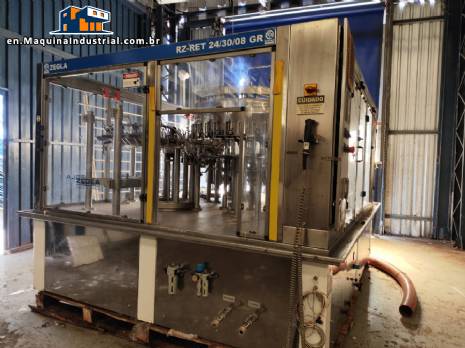
Zegla Máquinas produces equipment such as the ZT Isobaric Triblock, the ZM Monoblock, and the ZG Gravity Filling Machine, with capacities ranging from 2,000 to 36,000 BPH. Their equipment is designed for filling beers, soft drinks, mineral water, spirits, and vinegars.
ZL Máquinas manufactures the ZL-MR Rotary Monoblock and ZL Volumetric Dosing systems, primarily serving the cosmetics, cleaning products, and chemical industries. Capacities range approximately from 1,500 to 12,000 BPH.
Linsmar, together with Mastercorp, offers equipment such as the ERL Rotary Filling Machine and monoblocks equipped with piston feeders. These solutions typically operate between 1,000 and 8,000 BPH and are used for filling lubricants, cleaning products, and viscous foods. Chapter 8 – Multilingual Technical Glossary and Terminology for B2B SEO
Standardizing technical terminology facilitates communication between manufacturers, integrators, suppliers, and international clients, as well as improving the indexing of technical content in search engines focused on the B2B market.
The term Rotary Filling Machine corresponds, in English, to Rotary Filling Machine or Rotary Filler, while in Spanish it is called Llenadora Rotativa or Envasadora Rotativa. Among the most used keywords in technical searches are rotary liquid filling machine, rotary filler, and rotary bottling machine.
The Rotary Capping Machine is known internationally as Rotary Capping Machine or Rotary Capper, and in Spanish it is called Tapadora Rotativa or Roscadora. The main search terms include rotary screw capping machine, rotary capper, and bottle capping equipment.
Unibloco corresponds to the term Standalone Rotary Unit in English and Unidad Independiente or Monobloque Simple in Spanish. In technical research, expressions such as standalone rotary filler and single block rotary machine stand out.
The Monoblock, which integrates filling and capping, is internationally known as Monoblock (Filler-Capper), maintaining a similar nomenclature in Spanish (Monobloque). Among the main search terms are monoblock filler capper and 2 in 1 monoblock bottling machine.
The Triblock (Rinser-Filler-Capper – RFC) is known in English as Triblock Rinser-Filler-Capper and in Spanish as Tribloque Enjuagadora-Llenadora-Tapadora. The most used keywords include triblock bottling machine, 3 in 1 triblock, and rinser filler capper.
The Quadblock is frequently called Quadblock Packaging System in English and Cuadribloque de Envasado in Spanish. Among the most used expressions in search engines are 4 in 1 rotary filling machine and quadblock system.
Finally, Combi Systems (Blow-Fill-Cap – BFC) are internationally known as Blow-Fill-Cap Combi Systems and, in Spanish, Sistema Combi Soplado-Llenado-Tapado. The main related keywords include blow fill cap combi machine and combi block bottling machine. |





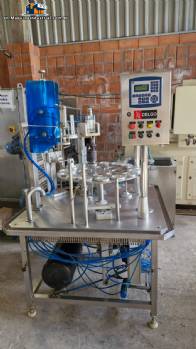

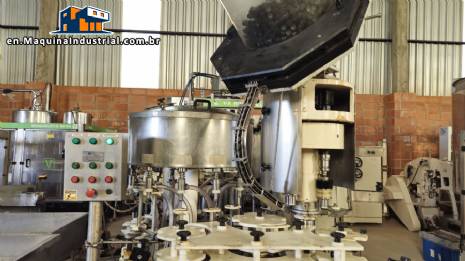
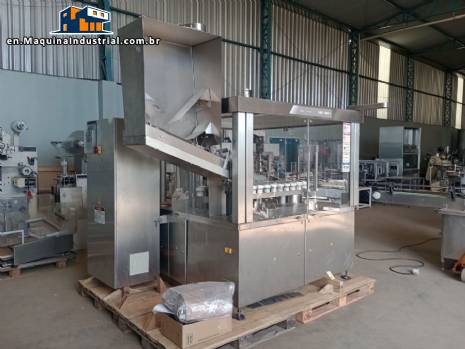

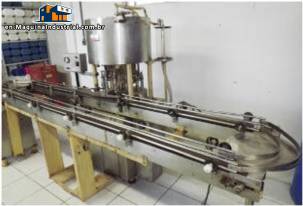
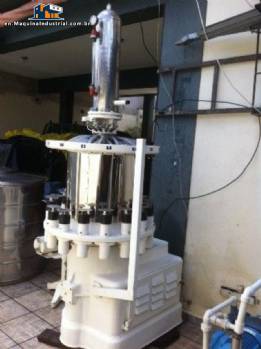

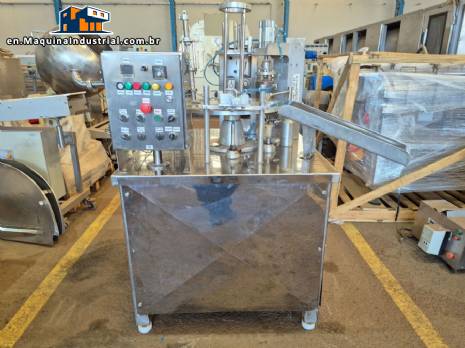
&c=822-712000&t=2 "Vinox Zegla rotary filling machine for 1 to 5-liter jerrycans and jugs (retrofitted)")